
Efficient home packing solutions in Singapore are organized methods for preparing household belongings for relocation, temporary storage, renovation, or downsizing. Instead of placing everything into boxes at random, an efficient packing process combines decluttering, proper packing materials, room-by-room organization, clear labeling, and safe handling.
Moving home can feel overwhelming, especially when there are furniture pieces, kitchenware, clothing, electronics, documents, and fragile belongings to prepare. With the right system, however, packing becomes much more manageable.
For households in Singapore, efficient packing can be particularly useful because many homes have limited storage space and busy schedules. A structured approach helps reduce wasted time, protect belongings, and make unpacking easier once you arrive at your new home.
What Makes Home Packing Efficient?
Efficient packing is not simply about filling boxes quickly. The goal is to use your time, materials, and available space wisely while keeping belongings protected.
A practical packing system should focus on five areas:
- Planning: Decide what needs to be packed, moved, stored, donated, or discarded.
- Protection: Use appropriate materials for fragile and valuable items.
- Organization: Pack items according to rooms, categories, or usage.
- Labeling: Clearly identify the contents and destination of each box.
- Coordination: Arrange transportation or storage before packing day.
When these steps work together, the entire relocation process becomes easier to manage.
Why Efficient Home Packing Solutions Matter in Singapore

Singapore households often need to balance moving with work, school, family responsibilities, and limited living space. Packing an entire home without a plan can quickly become a time-consuming project.
A more organized process can help you:
- Reduce unnecessary packing.
- Make better use of cartons and storage space.
- Protect fragile belongings.
- Find essential items more easily.
- Reduce confusion during unpacking.
- Prepare items for temporary storage.
- Coordinate packing with moving services.
- Minimize last-minute moving-day stress.
The Storage Place provides integrated storage and moving solutions, including packing support and packing materials, which can be useful when packing and storage need to be handled as part of the same relocation process.
Step 1: Declutter Before You Start Packing
One of the simplest ways to make packing more efficient is to reduce the number of things you need to move.
Before buying cartons, walk through each room and separate belongings into four categories:
| Category | Action |
|---|---|
| Keep | Pack and move to the new home |
| Store | Keep but move into temporary or long-term storage |
| Donate | Give away usable items |
| Discard | Dispose of broken or unusable items |
This step prevents you from spending time packing items that you no longer need.
Pro Tip: Do Not Pack Everything at Once
Start with items you rarely use.
Examples include:
- Seasonal decorations
- Extra kitchen equipment
- Books
- Collectibles
- Spare bedding
- Decorative items
- Archived documents
Keep everyday essentials until closer to moving day.
Step 2: Prepare the Right Packing Materials
Using unsuitable materials can make packing slower and increase the risk of damage.
A basic home packing kit may include:
- Strong cardboard cartons
- Packing tape
- Bubble wrap
- Protective paper
- Stretch film
- Plastic bags
- Labels
Different belongings require different levels of protection. A soft item such as clothing may only need a clean carton, while glassware, artwork, or electronics require additional cushioning.
The Storage Place also provides packing materials for customers, making it easier to prepare belongings before moving or storage.
Step 3: Pack Room by Room
Packing room by room creates a simple structure that makes both moving and unpacking easier.
A useful sequence is:
- Storage areas and rarely used rooms
- Guest rooms
- Living room decorations
- Books and non-essential items
- Kitchen items that are not used daily
- Bedrooms
Avoid mixing unrelated items simply because there is extra space in a box.
For example, placing kitchen equipment together with bedroom accessories may save one carton, but it can make unpacking much more difficult.
Step 4: Protect Fragile and Valuable Items
Fragile belongings deserve extra attention because they can be damaged by impacts, pressure, or incorrect stacking.
Common fragile household items include:
- Glassware
- Plates and ceramics
- Mirrors
- Lamps
- Picture frames
- Computers and monitors
- Televisions
Wrap individual items where appropriate and use cushioning material to prevent movement inside the carton.
Do not leave large empty spaces around fragile items. At the same time, avoid overfilling a box because excessive weight can crush items or make the carton difficult to carry.
Special Attention for Electronics
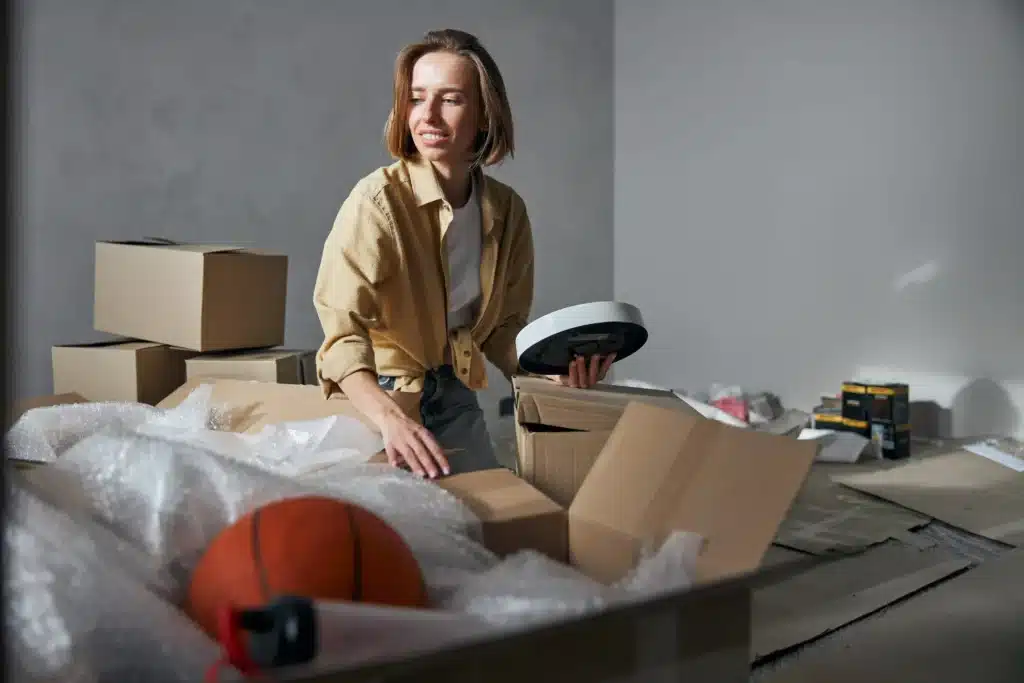
Electronics require more careful preparation than ordinary household items because they can be sensitive to impact, pressure, and environmental conditions.
Computers, televisions, monitors, printers, gaming equipment, and audio systems should be packed with suitable protective materials.
For households with valuable or delicate devices, consider using a professional electronics packing service rather than treating electronic equipment like ordinary household goods.
This is particularly useful when electronics need to be transported and stored before the new home is ready.
Step 5: Use a Clear Labeling System
Good labeling can save hours after the move.
Every carton should ideally include:
Room + Contents + Priority
For example:
MASTER BEDROOM – BED LINENS – OPEN SECOND
Or:
KITCHEN – GLASSWARE – FRAGILE
You can also use a simple priority system:
| Label | Meaning |
|---|---|
| OPEN FIRST | Items needed immediately |
| FRAGILE | Handle carefully |
| STORAGE | Items going into storage |
| DAILY USE | Items required during the first few days |
| LONG TERM | Items that do not need immediate access |
This system is especially helpful when belongings are temporarily stored before the final move.
Step 6: Create an Essentials Box
One common moving mistake is packing everything and then realizing that basic daily items are buried inside several cartons.
Prepare one or two clearly marked essentials boxes containing items such as:
- Basic toiletries
- Chargers
- Change of clothes
- Towels
- Basic kitchen items
- Cleaning supplies
- Important documents
- Basic tools
- Daily medication or personal necessities
Keep these boxes with you or make sure they are loaded last so they can be accessed first.
Step 7: Plan the Moving and Storage Arrangement
Packing should not be treated as a completely separate activity from transportation.
Before packing begins, determine where everything is going.
A simple workflow looks like this:
Declutter → Categorize → Pack → Label → Move → Store or Deliver → Unpack
If your new home is not ready yet, temporary storage can prevent boxes and furniture from overcrowding your current or future space.
The Storage Place offers moving services alongside storage solutions, allowing customers to coordinate packing, transportation, and storage according to their requirements.
DIY Packing vs. Professional Packing
Both approaches can work, depending on the size and complexity of the move.
| Factor | DIY Packing | Professional Packing |
|---|---|---|
| Time | Requires personal time | Faster with trained manpower |
| Materials | Must be sourced independently | Packing materials can be provided |
| Organization | Depends on your system | Structured packing process |
| Fragile items | Requires careful handling | Specialist handling available |
| Heavy items | More physically demanding | Professional assistance |
| Storage coordination | Usually arranged separately | Can be coordinated with storage |
| Convenience | Lower | Higher |
DIY packing may work well for smaller moves or households with plenty of time. Professional packing can be more practical when the home contains many fragile, bulky, or valuable belongings.
When Should You Consider Professional Home Packing?
Professional support can be especially useful when:
- You have a large household.
- You are moving on a tight schedule.
- You have many fragile belongings.
- You need furniture dismantling or handling.
- Your belongings need temporary storage.
- You are relocating while working full-time.
- You are renovating and need to clear the home.
- You are moving valuable electronics or specialty items.
The key benefit is not simply having someone put items into boxes. A professional approach can combine packing, handling, transportation, and storage into a more coordinated process.
How Efficient Packing Connects With Storage
Sometimes the biggest challenge is not the move itself but the period between two locations.
For example, imagine a family renovating their home. Furniture needs to leave the property before renovation starts, but the family does not want to sell or dispose of everything.
An efficient solution could be:
Pack → Transport → Store → Renovate → Retrieve → Deliver → Unpack
This avoids unnecessary movement between multiple locations.
The same principle can apply to families moving between homes, tenants waiting for a new property, students returning home, or households downsizing.
Common Home Packing Mistakes to Avoid
Even a simple packing project can become inefficient when a few common mistakes are made.
Packing Without Decluttering
Moving unwanted belongings wastes cartons, manpower, transportation space, and time.
Using One Box Size for Everything
Heavy items should generally be packed in manageable cartons rather than oversized boxes that become difficult to lift.
Leaving Boxes Unlabeled
A box without a label creates unnecessary work during unpacking.
Overpacking Fragile Items
Too many items in one carton can increase pressure and make the box difficult to handle.
Forgetting the Storage Destination
If some belongings are going into storage, identify them before moving day so they do not get mixed with items needed immediately.
Pro Tips for a Smoother Move
Pro Tip 1: Start with low-use items rather than everyday essentials.
Pro Tip 2: Label cartons on more than one side so the contents can be identified when boxes are stacked.
Pro Tip 3: Keep an inventory for valuable or high-priority belongings.
Pro Tip 4: Avoid mixing items from too many rooms in one carton.
Pro Tip 5: If your new home is not ready, consider combining packing, moving, and storage instead of moving the same items multiple times.
Pro Tip 6: Give fragile electronics, artwork, and other sensitive belongings extra protection rather than relying on ordinary cartons.
Conclusion: Make Your Singapore Home Move More Efficient
Efficient home packing solutions in Singapore are about more than putting belongings into cartons. The most effective approach combines decluttering, proper materials, room-by-room organization, protective packing, clear labeling, and a well-planned moving or storage arrangement.
For a small move, a structured DIY system may be enough. For larger or more complicated relocations, professional packing support can reduce the amount of work you need to handle yourself and help coordinate packing with moving and storage.
The Storage Place provides integrated solutions covering storage, packing, and moving, making it easier to manage belongings before, during, and after a relocation.
If you are planning a home move, renovation, downsizing project, or temporary storage arrangement, visit The Storage Place to explore the available storage and moving solutions and request a suitable quotation.
Frequently Asked Questions
Can packing and storage be arranged together?
Yes. Storage can be useful during renovations, relocation, decluttering, or when you need extra space for belongings that are not currently needed.
What are efficient home packing solutions in Singapore?
They are organized packing methods that combine planning, decluttering, suitable materials, protection, labeling, and coordinated moving or storage.
Is professional packing better than DIY packing?
It depends on the move. DIY can work for smaller moves, while professional packing can be useful for large households, fragile belongings, tight schedules, and storage-related moves.
How early should I start packing?
Start several weeks before moving day, beginning with items that are rarely used.
How should I pack electronics?
Yes. Combining packing, moving, and storage can simplify relocations when the new property is not immediately ready.