
Packing can look simple at first: put items into boxes, seal them with tape, and move them to their destination. But small mistakes during packing can cause bigger problems later. Boxes can become too heavy, fragile belongings can break, furniture can develop moisture damage, and poorly labeled cartons can make finding important items frustrating.
Knowing how to avoid packing errors means treating packing as an organized process rather than simply filling boxes. The right materials, packing techniques, labeling system, and storage plan can help protect belongings while making them easier to move and retrieve.
This is especially important when items will be stored for weeks or months. In Singapore, where humidity and limited living space can create additional storage challenges, careful preparation is an important part of protecting personal belongings.
What Does “How to Avoid Packing Errors” Mean?
How to avoid packing errors refers to the practical steps used to prevent common mistakes when preparing belongings for moving or storage.
These errors may include:
- Using weak or unsuitable boxes
- Putting too many heavy items in one carton
- Failing to protect fragile objects
- Packing damp or dirty belongings
- Using unsuitable wrapping materials
- Forgetting to label boxes
- Storing important items where they are difficult to access
- Creating unstable stacks
- Forgetting what has been packed
- Using plastic wrapping incorrectly around moisture-sensitive furniture
The goal is not simply to pack more efficiently. It is to create a packing system that keeps belongings protected, identifiable, accessible, and easy to transport.
Why Do Packing Errors Happen?

Most packing mistakes happen because people rush the process.
Imagine preparing for a house renovation. The work starts sooner than expected, so you quickly place books, decorations, kitchenware, and electronics into whatever boxes are available. Everything appears fine when the boxes are sealed.
A few months later, you need one particular item.
You cannot remember which box contains it.
One carton is too heavy to move safely. Another contains fragile glassware without enough cushioning. Some furniture has been wrapped incorrectly, while several boxes have no labels at all.
The problem was not the storage space. The problem started during packing.
A simple system before packing can prevent most of these issues.
How to Avoid Packing Errors Before You Start
1. Sort Your Belongings First
Do not start by grabbing the nearest box.
Begin by sorting belongings into categories such as:
| Category | Examples | Packing Priority |
|---|---|---|
| Fragile | Glassware, ceramics, ornaments | High |
| Electronics | Computers, monitors, appliances | High |
| Furniture | Tables, chairs, cabinets | Medium |
| Clothing | Clothes, shoes, linens | Medium |
| Documents | Files, certificates, paperwork | High |
| Seasonal items | Decorations, sports equipment | Low |
| Frequently used items | Daily essentials | Very high |
Sorting makes the rest of the packing process easier because you can choose appropriate materials and decide which items need quick access.
2. Choose the Right Packing Materials
One of the most common packing errors is assuming that every item can go into the same type of carton.
Use sturdy boxes that can handle the weight of their contents. Fragile items should have sufficient cushioning, while clothing and linens may be better suited to bags, suitcases, or appropriate storage containers.
Useful supplies can include:
- Strong cartons
- Packing tape
- Bubble wrap
- Packing paper
- Foam cushioning
- Protective covers
- Moisture absorbers
- Labels or markers
- Plastic storage bins for suitable items
The Storage Place also provides complimentary packing materials for qualifying storage customers, including cartons and masking tape depending on unit size.
3. Never Overfill Boxes
One of the easiest ways to avoid packing errors is to control the weight of each box.
A carton filled entirely with books may technically close, but it can become difficult to carry and may place excessive pressure on the box itself.
A better approach is to distribute weight.
For example:
- Place heavier items toward the bottom.
- Put lighter belongings toward the top.
- Avoid leaving excessive empty space.
- Do not force the lid closed.
- Reinforce the bottom of heavier cartons with strong tape.
A box should be secure and manageable, not simply as full as possible.
4. Clean and Dry Items Before Packing
Packing dirty or damp belongings is another common mistake.
Food residue can attract pests, while moisture can contribute to unpleasant odors, mold, mildew, or corrosion depending on the material.
Before packing:
- Clean the item.
- Allow it to dry completely.
- Remove unnecessary packaging or debris.
- Check for existing damage.
- Pack only when the item is ready for storage or transportation.
This step is particularly important for furniture, fabrics, kitchen equipment, and items that may remain packed for an extended period.
5. Be Careful With Furniture Wrapping
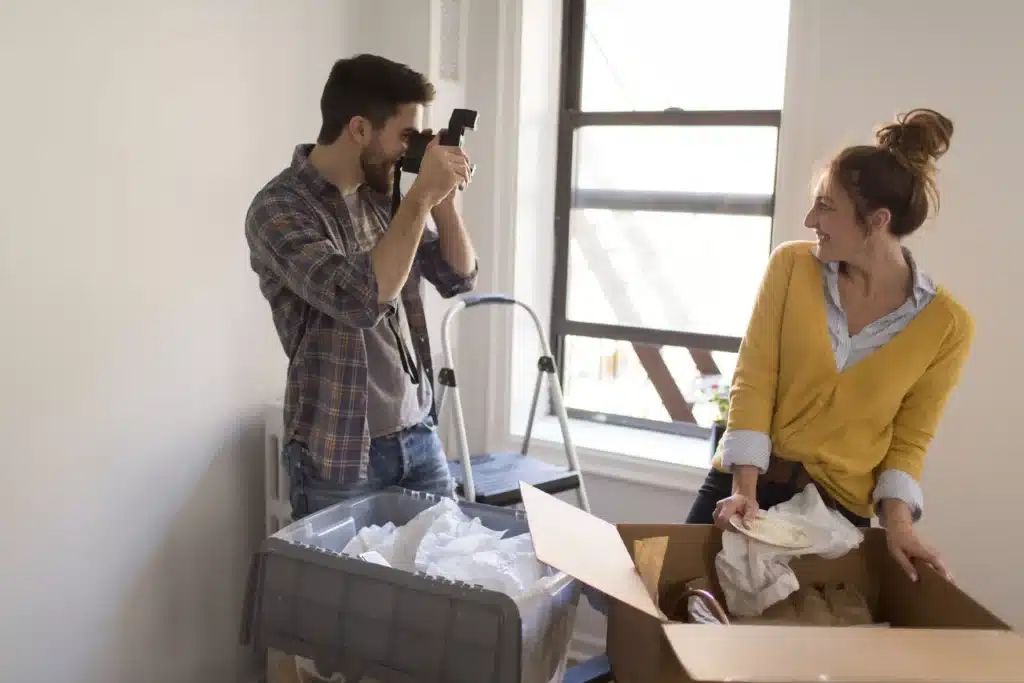
Furniture needs protection, but the wrong wrapping method can create problems.
Avoid tightly trapping moisture against moisture-sensitive surfaces. Instead, use appropriate breathable protective covers where suitable and make sure furniture is clean and dry before storage.
For larger furniture:
- Disassemble removable parts when practical.
- Keep screws and small components together.
- Protect corners and exposed surfaces.
- Avoid placing heavy objects directly on delicate furniture.
- Keep furniture stable during transportation and storage.
Taking photographs before disassembly can also make reassembly easier later.
6. Create a Simple Labeling System
Packing without labels often feels like a shortcut.
It usually creates more work later.
A useful label should identify:
- Box number
- Main contents
- Room or category
- Priority level
- Handling instructions when necessary
For example:
BOX 08 – KITCHEN – GLASSWARE – FRAGILE
This immediately tells you what the box contains and how it should be handled.
For a more detailed system, create an inventory list containing the box number and its main contents.
For additional guidance, see the importance of labeling boxes.
7. Keep Frequently Needed Items Accessible
Not every box should be treated equally.
If you are storing belongings during renovation, relocation, or a temporary transition, think about what you may need first.
Create an access priority system:
| Priority | Items | Storage Position |
|---|---|---|
| High | Daily essentials | Easy to reach |
| Medium | Seasonal belongings | Middle area |
| Low | Long-term storage | Back or lower area |
This prevents you from having to move ten boxes just to reach one important carton.
8. Plan the Storage Layout Before Moving Everything In
A storage unit should not become a random collection of boxes.
Think about the layout before placing your belongings inside.
If the storage space allows it, leave a practical access path so you can reach different sections without unpacking the entire unit.
The Storage Place provides self-storage solutions for personal belongings, home renovation needs, seasonal items, and small office or inventory storage, making organized packing especially useful for customers using storage over an extended period.
Common Packing Errors to Avoid
Here is a quick checklist you can use before sealing your final box.
| Packing Error | Why It Causes Problems | Better Approach |
|---|---|---|
| Overfilled boxes | Difficult to carry and may collapse | Distribute weight |
| No labels | Items become difficult to locate | Label every box |
| Weak cartons | Higher risk of damage | Use sturdy boxes |
| No cushioning | Fragile items can shift or break | Add protective materials |
| Packing damp items | Can contribute to moisture problems | Dry items first |
| Random stacking | Creates instability | Heavy items below |
| No inventory | Difficult to remember contents | Keep a simple list |
| Blocking access | Makes retrieval difficult | Plan the storage layout |
| Wrapping furniture incorrectly | May trap moisture | Use suitable covers |
| Mixing unrelated items | Slows down unpacking | Group by category |
A Simple Packing Workflow
If you want an easy process to follow, use this sequence:
SORT → CLEAN → SELECT MATERIALS → PACK → PROTECT → LABEL → INVENTORY → STORE
Step 1: Sort
Decide what will be stored, donated, sold, recycled, or kept with you.
Step 2: Clean
Make sure belongings are clean and completely dry.
Step 3: Select Materials
Choose boxes and protective materials according to the item.
Step 4: Pack
Place heavy items at the bottom and lighter items above them.
Step 5: Protect
Give fragile and valuable belongings additional cushioning.
Step 6: Label
Write the box number, category, contents, and handling instructions.
Step 7: Inventory
Record what each box contains.
Step 8: Store
Arrange belongings according to access frequency and weight.
Pro Tips for Avoiding Packing Errors
If you remember only a few things, remember these:
Pro Tip 1: Do not wait until the last minute to pack.
Pro Tip 2: A heavier box is not necessarily a better-packed box.
Pro Tip 3: Always label before moving the box away from your packing area.
Pro Tip 4: Keep important or frequently needed belongings easy to reach.
Pro Tip 5: Take photos of valuable items and complicated furniture before storage.
Pro Tip 6: For long-term storage, think about moisture, accessibility, stacking pressure, and protection—not just available space.
Pro Tip 7: When storage is part of a renovation or relocation project, plan the packing and storage process together instead of treating them as separate tasks.
When Should You Consider Professional Storage Support?
Sometimes the challenge is not packing itself but finding enough suitable space to keep everything organized.
This is common during:
- Home renovations
- Moving between properties
- Decluttering
- Office relocation
- Seasonal storage
- Temporary housing
- Business inventory management
The Storage Place offers self-storage facilities across multiple Singapore locations and combines storage with related moving, packing, and logistics support. Its self-storage service is designed for individuals, families, and businesses that need additional space.
If you need a dedicated space to keep packed belongings secure and organized, explore Self Storage from The Storage Place.
Conclusion: How to Avoid Packing Errors With a Smarter System
Learning how to avoid packing errors is less about buying more packing materials and more about having a clear system.
Sort belongings before packing, choose appropriate containers, protect fragile items, distribute weight, keep everything clean and dry, label every box, and maintain a simple inventory. Most importantly, think about how you will access your belongings later—not just how quickly you can pack them today.
When storage is required, a well-organized storage unit can make the entire process easier. The Storage Place provides flexible storage solutions across Singapore for personal, household, renovation, and business needs.
Ready to organize your belongings and create more space? Visit The Storage Place to explore its storage solutions and choose an option that fits your needs.
Frequently Asked Questions
What is the best way to avoid packing errors?
The best way is to sort items first, use suitable packing materials, protect fragile belongings, label every box, and keep a simple inventory.
How can I avoid overpacking boxes?
Distribute heavy items across several boxes and place lighter items on top. Avoid filling boxes until they become difficult to lift.
Why is labeling important when packing?
Labels make it easier to identify box contents, prioritize important items, and find belongings quickly without opening every box.
How should I pack fragile items?
Wrap fragile items individually, add cushioning around them, fill empty spaces, and clearly mark the box as fragile.
Should I use storage after packing my belongings?
Yes. Storage can be useful during renovations, relocation, decluttering, or when you need extra space for belongings that are not currently needed.