
Storage for sports equipment in Singapore is a practical solution for individuals, families, athletes, and sports enthusiasts who need additional space to organise their gear. From bicycles and golf clubs to camping equipment, yoga mats, badminton rackets, and fitness accessories, sporting items can quickly take up valuable room at home. With Singapore’s compact living spaces, finding suitable storage arrangements is important for maintaining a comfortable and clutter-free environment.
Whether you enjoy weekend cycling, play badminton regularly, participate in outdoor activities, or maintain a home fitness routine, having a dedicated place for your equipment makes everyday life easier. Instead of leaving sporting goods in spare rooms, corridors, balconies, or cupboards, you can organise them according to their size, frequency of use, and storage requirements.
A suitable storage arrangement also helps protect equipment from dust, accidental damage, and unnecessary handling. By choosing the right storage method, you can keep your sporting essentials in better condition while making more room for other household activities.
Why Is Storage for Sports Equipment in Singapore Important?
Sports equipment often comes in different shapes and sizes. Some items are lightweight and easy to organise, while others, such as bicycles, exercise machines, golf bags, and camping equipment, require considerably more room.
For Singapore households, where apartment and condominium layouts may have limited storage space, managing these belongings can become challenging.
Here are several reasons why having a proper storage arrangement is beneficial.
1. Make More Room at Home
Unused sporting equipment can gradually occupy valuable living space. A bicycle placed near the entrance, several exercise mats in the bedroom, or camping supplies inside a spare cupboard can make a home feel crowded.
Moving equipment that is not needed every day into a dedicated storage space helps create a more organised environment.
This is particularly useful for:
- HDB flats with limited built-in storage.
- Condominiums with smaller utility areas.
- Families sharing limited cupboard space.
- Homeowners with multiple sporting hobbies.
- Individuals who participate in seasonal outdoor activities.
2. Keep Sports Equipment Better Organised
When sporting goods are scattered around the house, finding a particular item before an activity can become frustrating.
A dedicated storage arrangement allows you to group similar equipment together. For example, cycling accessories can be kept in one section, while badminton rackets and fitness accessories can be organised separately.
This makes it easier to locate your belongings whenever you need them.
3. Reduce Unnecessary Damage
Sports equipment can become damaged when it is placed carelessly or stored alongside unrelated household items.
For example, badminton rackets may be affected by pressure from heavier objects, while bicycle components can become scratched when they are placed against other equipment.
Using appropriate covers, protective cases, and organised shelving can help reduce these risks.
4. Support Different Sporting Hobbies
Some people enjoy several activities throughout the year. A family might own bicycles, camping supplies, golf equipment, swimming accessories, and home fitness products.
Keeping everything at home may not be practical.
External storage provides additional flexibility for people who want to maintain their hobbies without allowing equipment to take over their living space.
How to Prepare Sports Equipment Before Storage
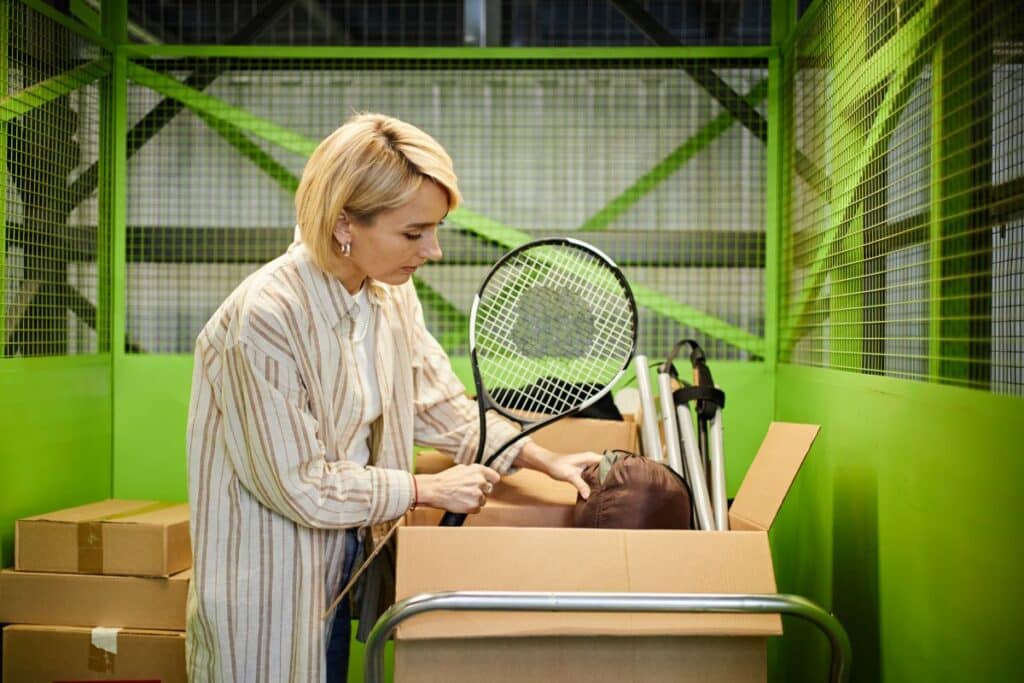
One of the most important steps in storing sporting goods is preparing them properly. Equipment should not simply be placed into boxes or storage bags immediately after use.
A little preparation can make a significant difference to its condition.
Step 1: Clean Every Item Thoroughly
Sports equipment can collect sweat, dirt, grass, dust, and moisture during regular activities.
Before storing anything, clean the items according to the manufacturer’s care instructions.
For example:
- Wipe down bicycle frames and handlebars.
- Clean the exterior of golf bags.
- Remove dirt from footballs and basketballs.
- Wash reusable sports accessories where appropriate.
- Remove sand and debris from camping equipment.
Clean equipment is easier to organise and less likely to transfer dirt to other belongings.
Step 2: Make Sure Everything Is Completely Dry
Moisture is an important consideration when storing sporting goods in Singapore.
Singapore’s tropical climate is generally warm and humid throughout the year. Equipment that is packed while damp may develop unpleasant odours, mould, or material deterioration.
Pay particular attention to:
- Swimming accessories.
- Camping tents.
- Towels and sports clothing.
- Protective padding.
- Shoes and footwear.
- Fabric sports bags.
Allow these items to dry completely before placing them inside storage containers.
Step 3: Separate Equipment by Category
Avoid putting all your sporting goods into one large box.
Instead, organise them into categories such as:
- Outdoor sports equipment.
- Indoor fitness accessories.
- Water sports equipment.
- Camping and recreational supplies.
- Protective clothing and accessories.
This makes it easier to locate individual items and reduces unnecessary handling.
Step 4: Use Appropriate Protective Materials
Different sporting goods require different types of protection.
Consider using:
- Protective covers for bicycles and larger equipment.
- Racket bags for badminton and tennis rackets.
- Plastic containers for suitable small accessories.
- Breathable bags for dry fabric items.
- Original equipment cases for delicate accessories.
Avoid tightly sealing equipment that may retain moisture. Always follow the manufacturer’s recommendations for long-term storage.
Step 5: Create a Simple Inventory List
An inventory list helps you remember what has been placed in storage.
You can use a spreadsheet, notebook, or mobile application to record the items.
| Category | Item | Quantity | Storage Locaation |
|---|---|---|---|
| Cycling | Bicycle helmet | 2 | Box A |
| Badminton | Rackets | 4 | Sports bag |
| Camping | Tent | 1 | Box B |
| Fitness | Yoga mats | 2 | Box C |
| Golf | Golf bag | 1 | Equipment section |
Remember to update the list whenever you add or remove equipment.
Choosing Between Home Storage and External Storage
Not every sporting item needs to be moved outside your home. The best solution depends on how frequently you use your equipment and how much space you have available.
For frequently used items, keeping them at home may be more convenient. However, equipment that is only used occasionally may benefit from a separate storage arrangement.
Here is a simple comparison.
| Consideration | Home Storage | External Self-Storage |
|---|---|---|
| Accessibility | Convenient for everyday use | Depends on facility access arrangements |
| Available space | Limited by home layout | Additional dedicated space |
| Organisation | Requires household space | Can be arranged by category |
| Larger equipment | May occupy living areas | More room for bulky belongings |
| Cost | Uses existing household space | Requires a rental budget |
| Flexibility | Depends on available cupboards and rooms | Unit sizes and rental arrangements vary |
When Should You Consider External Storage?
External storage may be useful when:
- You own several bicycles or large sporting items.
- Your family participates in multiple sports.
- You have limited cupboard or utility space.
- You only use certain equipment occasionally.
- You are renovating your home.
- You need temporary space while reorganising your belongings.
If you are also managing equipment for other recreational activities, you can explore these practical ideas in our guide to Storing Hobby Items.
How to Choose the Right Storage Space for Sports Equipment in Singapore
Choosing a storage unit involves more than simply finding the cheapest available option. You should consider the equipment’s dimensions, accessibility requirements, storage duration, and environmental needs.
1. Estimate the Total Storage Space Required
Start by measuring your largest sporting items.
For example, bicycles, exercise machines, and golf bags may require more space than smaller accessories.
Consider:
- Overall length and height.
- Width of larger equipment.
- Space needed for protective covers.
- Room required to retrieve items comfortably.
- Additional space for future equipment.
Do not select a unit based only on the number of items. Their shapes and dimensions also matter.
2. Consider Accessibility
Think about how often you need to retrieve your equipment.
If you cycle every weekend, you may need convenient access to your bicycle and accessories.
On the other hand, camping equipment used only during occasional holidays may not require frequent visits.
Choose a storage arrangement that matches your routine and check the facility’s access policies before renting.
3. Check Security Features
Sports equipment can represent a considerable investment, particularly bicycles, golf clubs, and specialised fitness products.
Before choosing a storage provider, ask about:
- CCTV surveillance.
- Access control systems.
- Facility security procedures.
- Available staff assistance.
- Rules for accessing stored belongings.
These details can help you make a more informed decision.
4. Understand Environmental Requirements
Not all sporting equipment can be stored in the same conditions.
Items containing rubber, leather, foam, fabric, or metal components may have different environmental requirements.
Check whether your equipment needs additional protection from humidity, temperature changes, or prolonged exposure to dust.
If your equipment requires controlled temperature or humidity, confirm that the chosen storage facility offers a suitable environment. Do not assume every standard storage unit is climate-controlled.
5. Compare Rental Costs and Terms
Before committing to a storage unit, understand the rental arrangements.
Check:
- Monthly rental charges.
- Minimum rental duration.
- Deposit requirements.
- Available unit sizes.
- Access arrangements.
- Additional handling or transportation costs.
- Conditions for ending the rental.
A transparent quotation helps you plan your budget and avoid unexpected expenses.
Common Mistakes to Avoid When Storing Sports Equipment
Even a well-organised storage space can become difficult to manage if equipment is packed incorrectly.
Here are some common mistakes worth avoiding.
Storing Wet Equipment
Putting damp clothing, towels, or camping accessories into closed containers can encourage mould and unpleasant odours.
Always make sure fabric items are completely dry before packing.
Overloading Storage Boxes
Heavy items can damage lighter equipment when stacked incorrectly.
Place heavier, stable items at the bottom and lighter accessories above them. Keep delicate equipment in protective cases.
Forgetting to Label Containers
Unlabelled boxes make it difficult to locate specific sporting accessories.
Use clear labels such as:
- Cycling Accessories.
- Badminton Equipment.
- Camping Supplies.
- Fitness Accessories.
Ignoring Equipment Maintenance
Long periods without use can affect sporting equipment.
Before storing items, inspect them for visible damage and follow the manufacturer’s maintenance recommendations.
Choosing an Inappropriate Storage Environment
Some materials are sensitive to moisture and temperature fluctuations.
Check the environmental requirements of your equipment and choose suitable protection rather than assuming a standard storage space is appropriate for every item.
A Simple Storage System for Sports Enthusiasts
You do not need a complicated organisation system to manage your equipment. A simple approach can make your belongings much easier to maintain.
Here is how each stage works:
| Stage | What to Do | Expected Benefit |
|---|---|---|
| Sort | Separate frequently used and unused items | Remove unnecessary clutter |
| Clean | Remove dirt and residue | Keep equipment presentable |
| Dry | Allow moisture to evaporate | Reduce moisture-related problems |
| Categorise | Group similar equipment | Improve organisation |
| Protect | Use appropriate covers and cases | Reduce accidental damage |
| Label | Identify boxes and containers | Find items more easily |
| Store | Place items in suitable locations | Use space efficiently |
| Review | Check stored equipment periodically | Keep inventory updated |
Pro Tips for Better Sports Equipment Storage
A few small habits can make storage much easier over time.
- Keep frequently used equipment separate from occasional-use items.
- Store smaller accessories together in labelled containers.
- Avoid placing heavy objects on delicate sporting goods.
- Take photographs of valuable equipment for inventory records.
- Review your equipment collection before purchasing new items.
Most importantly, choose a storage arrangement that fits your lifestyle instead of making your daily activities more complicated.
Why The Storage Place Can Help With Your Storage Needs

Finding enough space for sports equipment can be challenging, especially when your household already has furniture, personal belongings, and everyday essentials to manage.
The Storage Place provides self-storage solutions in Singapore for individuals, families, and businesses that need additional room for their belongings.
Its storage facilities offer different unit sizes to accommodate various storage requirements, including sports equipment, household items, furniture, and business inventory.
Some benefits to consider include:
- Flexible storage options: Choose a unit according to your storage requirements.
- Multiple locations: Facilities are available in different parts of Singapore.
- Security features: Facilities include CCTV surveillance and controlled access systems.
- Everyday accessibility: Check the facility’s access arrangements to plan your visits.
- Additional convenience: Integrated moving and packing support can help with storage preparation.
The Storage Place offers several unit configurations, including small, medium, and large options. You can discuss the dimensions and estimated quantity of your sporting goods with the team before deciding which unit is suitable.
Conclusion: Find the Right Storage for Sports Equipment in Singapore with The Storage Place
Storage for sports equipment in Singapore is a practical way to keep your sporting goods organised while making more room at home. Whether you own bicycles, golf clubs, camping supplies, badminton equipment, or fitness accessories, proper preparation and storage planning can help keep your belongings accessible and better protected.
Start by cleaning and drying your equipment, grouping similar items, and identifying how much space you actually need. Then compare storage options based on unit size, accessibility, security, and rental arrangements.
If you need additional space for your sporting essentials, explore the self-storage solutions offered by The Storage Place. With different unit sizes and multiple facilities across Singapore, The Storage Place can help you find a storage arrangement that suits your personal or household requirements.
Visit The Storage Place to explore available storage options and request a quotation for your needs.
Frequently Asked Questions
Why do I need storage for sports equipment in Singapore?
It helps keep bulky sporting goods organised, protected, and out of your living space.
What sports equipment can I keep in a storage unit?
You can store bicycles, golf clubs, badminton rackets, camping gear, fitness accessories, and other suitable sporting items.
How should I prepare sports equipment before storage?
Clean and dry all equipment thoroughly, use protective covers, and organise items into labelled containers.
How do I choose the right storage unit size?
Consider the number, dimensions, and type of equipment you plan to store. Choose a unit with enough room for safe placement and access.
Where can I find self-storage in Singapore for sports equipment?
The Storage Place offers different self-storage options across Singapore. Visit The Storage Place to explore available units.